Pay-Per-Fax vs Subscription: Send 1 Fax, No Plan
 Mircea Rilă
Compare one-time fax costs with monthly and annual subscriptions. Include pages, receiving, destination terms and BAA eligibility in the calculation.
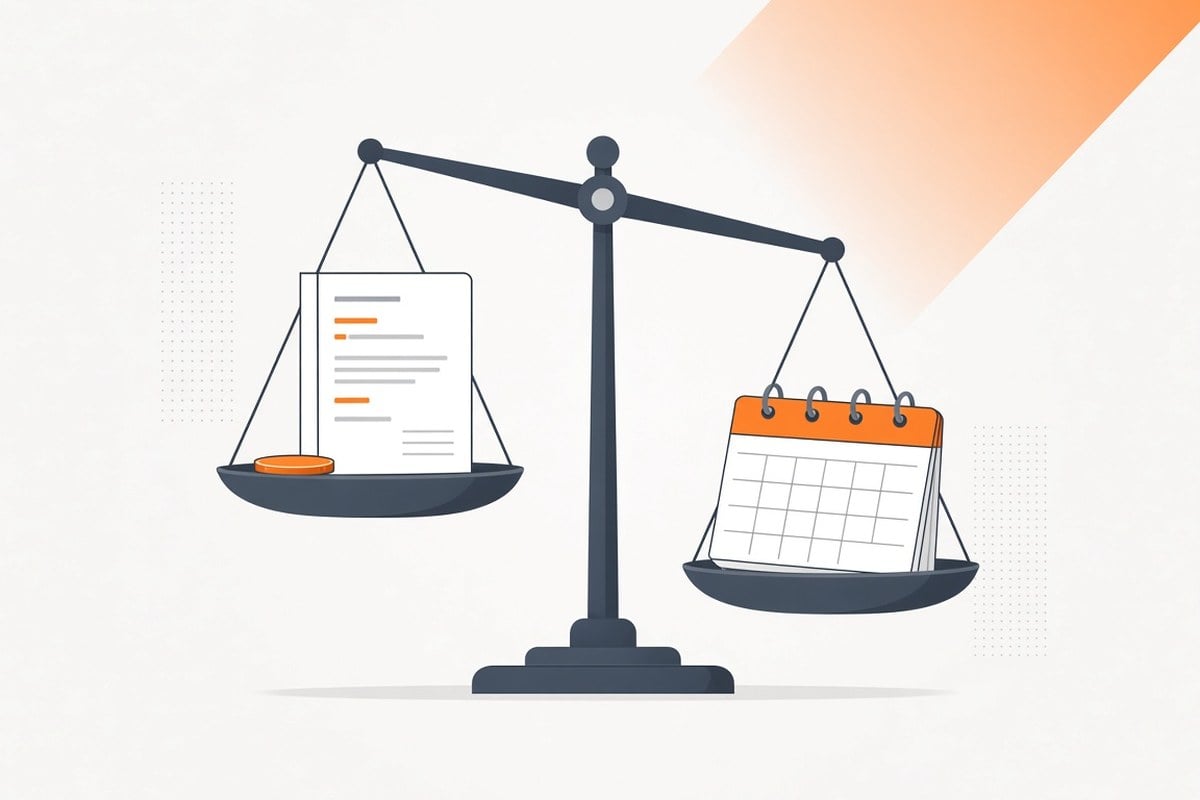
Pay-per-fax can fit a few outgoing tasks a year; a subscription can fit a continuing number and recurring use. Compare the complete workload before choosing. One transmission, a month of fax access and a dedicated office number are different purchases.
Start with the comparison of online fax services for one-time use for occasional sending. If you need a continuing account, the HumbleFax, Fax.Plus, iFax and FaxBurner reviews explain their allowances, billing commitments and cancellation terms.
Cost of occasional ordinary sending
This illustration assumes successful ordinary SingleFax sends of no more than ten document pages, and no receiving requirement. eFax Personal is compared using its checked $18.99 month-to-month price or published $189.96 annual bill. Prices checked 8 October 2026, before applicable taxes and extras.
| Workload across a year | SingleFax one-time sends | Continuous eFax Personal, monthly billing | eFax Personal annual billing |
|---|---|---|---|
| One short send | $0.99 | $227.88 / year | $189.96 / year |
| Five eligible short sends | $4.95 | $227.88 / year | $189.96 / year |
| Twelve eligible short sends | $11.88 | $227.88 / year | $189.96 / year |
The subscription columns deliberately show keeping an account for a full year. You could instead buy a month for a shorter need, subject to cancellation and renewal terms. eFax includes its number and allowance during the paid period, so the table is not a claim that one transmission inherently costs a year's subscription.
A genuine free quota can cost less than either paid option. The free fax guide distinguishes starter sending allowances, temporary receiving and renewing trials.
Count the actual packet and destination
Ordinary SingleFax sending starts at $0.99 for up to ten document pages, with $0.08 for each additional document page up to 100. A twelve-page packet therefore costs $1.15. A cover generated in the composer is excluded from billed document pages; a cover already inside an uploaded PDF is part of that document.
High-cost US/Canada routes and other destinations have separate quotes and charge-on-dial terms. Inspect the visible destination and complete packet before checkout. A low headline price is not a universal international tariff.
For a subscription, include sent and received usage, destination weighting, extra-page fees and per-fax limits. Having 300 monthly pages does not necessarily mean the service accepts a single 300-page fax. Read the specific plan's packet cap.
When an ongoing plan makes sense
A continuing receiving number, regular correspondence, shared administration or integrations can justify a plan. Include those needs in the calculation rather than evaluating every subscription dollar solely against one outgoing document.
SingleFax Standard is $7.90 monthly or $79 annually with 300 pooled monthly pages; Business is $23.90 monthly or $239 annually with 1,000. Ordinary overage is $0.02 per page, with destination allowances and international usage adjustments. The company plans describe the ongoing workflow. Keeping an existing fax number is another reason to choose a subscription: free port-in is now available for one eligible US/Canada local number per request on Standard or Business, monthly or annual, including HIPAA Secure. New port-in billing starts after carrier completion and verified fax routing. Lifetime and 30-day plans do not accept port-ins; port-out is $10 regular or $150 vanity, prepaid and fully refunded after confirmed failure or cancellation.
There is no universal page-volume break-even point. Ten one-page faxes and one ten-page fax can have different per-packet costs. A customer who needs a receiving number also has different requirements from someone sending only. Calculate the actual packet pattern and required features.
Receiving without a continuing subscription
A free 24-hour number can fit someone sending now, subject to the shared 25-page free incoming pool, one active number and three free claims per rolling 30 days. It is usually too short for an agency response expected next week.
The $4.99 thirty-day option includes the first received fax; additional receiving is paid separately. The $97 lifetime number includes starter credit and keeps a continuing number without a recurring number subscription, but additional usage is paid. Lifetime does not mean unlimited free faxes.
Choose a duration that covers the expected reply before placing a return number on a form. A recovery window after expiry is not extra free active receiving time.
Sensitive documents require the right product
For organizational PHI, compare an approved service and its BAA. SingleFax's ordinary $0.99 route is separate from the HIPAA web workflow, which starts at $6.50 for up to ten pages. An authorized organizational representative must accept the agreement.
The BAA comparison includes verified healthcare paths and free clinician eligibility. Ordinary email-to-fax or WhatsApp should not be used as a substitute merely because it is convenient.
Review the quote before sending
Prepare the complete readable document, verify the recipient's fax number and inspect the quote and payment terms. Save the transmission result and follow the recipient's confirmation process when necessary: delivered to a fax endpoint is distinct from approval or review.
If an occasional ordinary send fits, review a one-time fax quote. If you need an ongoing number and recurring allowance, compare plans.