Can You Fax a Tax Return to the IRS? (Form 1040 Rules)
 Mircea Rilă
There is no general fax number for Form 1040. Learn which IRS requests can accept faxed documents and when to e-file or mail a tax return.
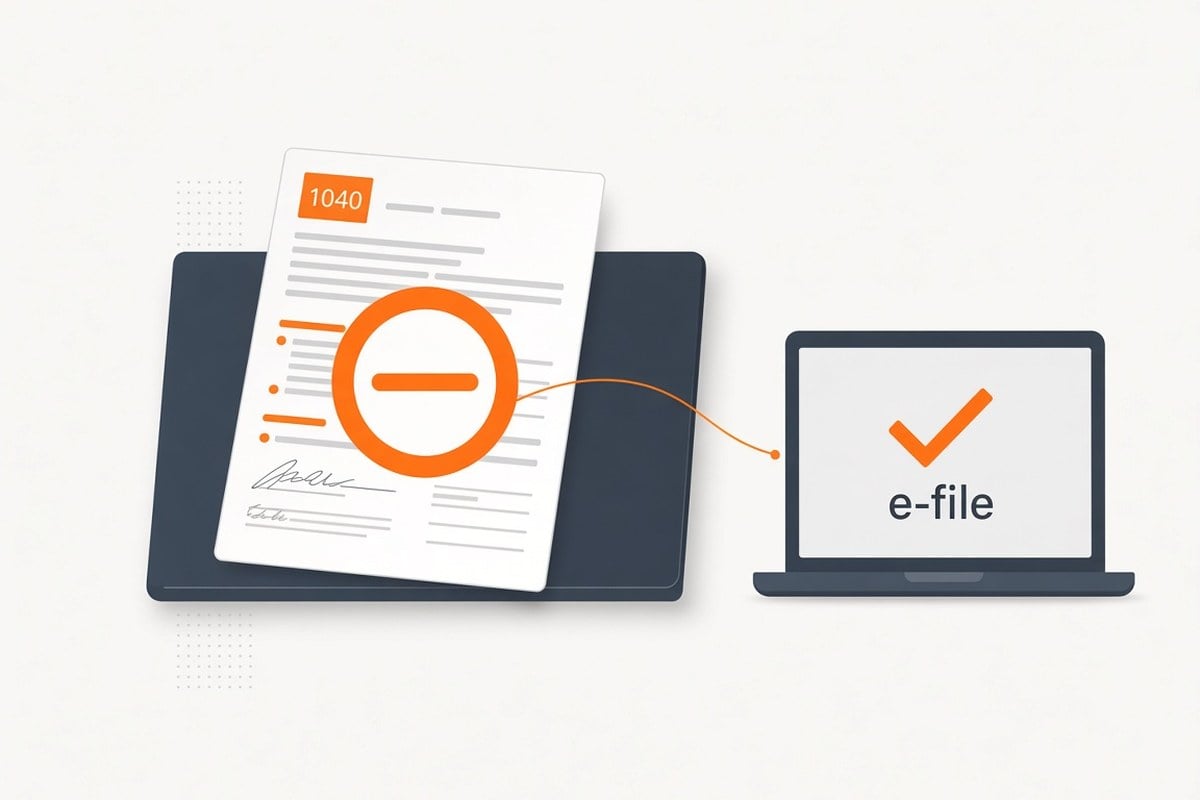
If you are approaching the federal tax deadline and looking for a fast way to submit your annual tax return, you might wonder if you can simply fax your completed Form 1040 to the Internal Revenue Service (IRS).
The short answer is no. The IRS does not accept standard annual tax returns submitted via fax. Understanding why this restriction exists, and how to file your return correctly, will help you avoid missed deadlines, lost documents, and failure-to-file penalties.
Why the IRS Rejects Faxed Tax Returns
The IRS processes hundreds of millions of individual and business tax returns annually. To handle this massive volume, the agency relies on two strictly segregated intake pipelines:
- Modernized e-File (MeF): The digital pipeline that ingests, authenticates, and validates electronic returns transmitted by authorized tax software.
- Lockbox Submission Processing Centers: Specialized high-speed mail facilities equipped with industrial sorting, scanning, and check-processing equipment.
+-------------------------------------------------------------+
|               HOW THE IRS PROCESSES TAX RETURNS             |
+-------------------------------------------------------------+
| Authorized E-File Software    --> Instant digital intake    |
| Physical Paper Mail (Lockbox) --> High-speed mail scanning  |
| General IRS Fax Lines         --> DISCARDED / UNPROCESSED   |
+-------------------------------------------------------------+
General IRS fax machines are not connected to the core tax return ingestion databases. If you transmit an unsolicited Form 1040, Form 1120, or Form 1065 to a general IRS toll-free number or an intake line meant for other forms (such as EIN processing):
- The document is not routed to a tax examiner.
- The transmission is discarded or placed in an administrative hold queue.
- The IRS will treat your return as unfiled, leading to failure-to-file penalties and interest charges.
The Sole Exception: Direct Caseworker or Notice Requests
There is only one scenario where faxing a tax return to the IRS is legally recognized: when an IRS agent or formal written notice explicitly instructs you to do so.
This exception applies exclusively to:
- Active Audits and Examinations: When an assigned revenue agent requests a copy of a prior return or supporting schedules.
- Identity Verification Notices: When a specific IRS notice (such as a CP05A or 5071C notice) requests documentation sent to a dedicated caseworker fax line.
- Appeals and Collections Cases: When working directly with an assigned IRS officer on an installment agreement or settlement.
In these situations, the agent or notice will provide a specific, dedicated fax number. You must include your case number, notice number, and the agent's name on your cover sheet. Never transmit an audit response to general toll-free numbers.
How You Must File Your Form 1040
To file your federal income tax return correctly, you must use one of the two authorized channels:
1. Electronic Filing (E-File). Recommended
E-filing is the fastest and most secure method to file:
- IRS Free File: Available on IRS.gov for eligible income thresholds.
- Commercial Tax Software: Platforms such as TurboTax, H&R Block, or TaxSlayer.
- Authorized Tax Preparers: Certified Public Accountants (CPAs) and Enrolled Agents (EAs).
2. Paper Filing by Mail
If you cannot e-file, you must print the return, sign it in wet ink, attach required W-2 or 1099 statements, and mail it to the designated IRS processing address for your state using certified mail with tracking. Check Where to File Paper Tax Returns on IRS.gov for the correct mailing address.
What Forms CAN You Fax to the IRS?
While standard annual tax returns cannot be faxed, the IRS maintains dedicated fax intake centers for specialized administrative applications and disclosures:
| Form | Purpose | Verified Fax Line / Routing |
|---|---|---|
| Form SS-4 | EIN Application (50 states / DC) | 855-641-6935 |
| Form SS-4 | EIN, no US residence, sending from inside the US | 855-215-1627 |
| Form SS-4 | EIN Application (outside the US) | 304-707-9471 (+1-304-707-9471) |
| Form 5472 | Foreign-Owned US Disregarded Entity (+ Pro Forma 1120) | 855-887-7737 (Ogden PIN Unit) |
| Form 7004 | 6-Month Extension for Form 5472 | 855-887-7737 (Ogden PIN Unit) |
| Form 2848 | Power of Attorney & Declaration of Representative | Regional CAF Units (Verify on IRS.gov) |
| Form 4506-T | Request for Transcript of Tax Return | Regional RAIVS Units (Verify on IRS.gov) |
| Form 2553 | S-Corporation Election | Kansas City or Ogden by principal-business state, File Form 2553 ($49 timely / $79 late) or the Form 2553 fax guide |
| Form 15397 | Extra time to furnish recipient statements (not a 1040; not an IRS 1099 filing extension) | TSO 877-477-0572 / intl 304-579-4105, Form 15397 fax guide |
| Form 8802 | US residency certificate request. The letter, Form 6166, comes later | Inside the US 877-824-9110, otherwise 304-707-9792. Pay the IRS fee on Pay.gov first. Form 8802 by fax |
For a full list of verified agency lines, consult our IRS Fax Numbers Directory 2026.
Submit Eligible IRS Documents with SingleFax
If you need to transmit eligible federal or state documents that support fax filing, SingleFax provides secure, pay-per-use transmission without recurring subscriptions:
- Send a Single Fax: Transmit eligible forms starting at $0.99 for up to 10 pages at Send or Receive a Fax.
- Apply for an EIN: Complete Form SS-4 and receive your official assignment notice for $19.99 at Get EIN.
- File Form 5472: Prepare pro forma 1120 and Form 5472 for foreign-owned LLCs for $29.99 at File Form 5472.
- File Form 7004 Extension: Secure an automatic 6-month extension for $4.99 at File Form 7004.
- File Form 2553: Elect S-corp status, guided Form 2553, faxed to Kansas City or Ogden, $49 timely / $79 late at File Form 2553.
Related Guides
- File Form 2553 by fax
- How to Fax Form 2553 (S-Corp Election) in 2026
- How to Fax Form 15397 (Recipient Statement Extension) in 2026
- IRS Fax Numbers Directory 2026: Verified Numbers for SS-4, 5472, and 7004
- How to File Form 5472 by Fax for Foreign-Owned US LLCs
- Form 7004 Extension for Form 5472: How to Fax the IRS
- How to Apply for an EIN by Fax (Form SS-4 Guide)
- IRS and State Forms You Can Still Fax in 2026
Disclaimer: SingleFax provides document transmission tools. SingleFax is not a CPA firm or law firm, and the information in this article does not constitute legal, tax, or accounting advice. Always consult a qualified tax professional regarding federal tax return filing requirements.