Form 5472 Penalty ($25,000): Abatement, Reasonable Cause & What to Do If You Missed It (2026)
 Mircea Rilă
Got a $25,000 Form 5472 penalty, or missed the filing? Plain-English steps: file late, read CP15/CP215, ask for reasonable cause relief, and avoid it next year.
Take a breath. A $25,000 penalty letter is scary, and you are not the only LLC owner who has opened one.
This guide is in plain words. It explains what the penalty is, what those IRS notices mean, and what to do next. It is not tax advice. If the IRS has already charged you, a CPA who knows foreign-owned LLCs is worth the money. The steps below will help you talk to them, and act fast.
If you have not filed yet, start here: File Form 5472 and our walkthrough on how to file Form 5472 by fax.
What the $25,000 Penalty Is
Form 5472 tells the IRS about deals between a US business and its foreign owner. If you had to file it and you did not, or you filed it late, or you left out so much that it counts as not filed, the penalty is $25,000.
That is per form, per year. Miss two years, and it can be charged twice.
It is not a tax on your profit. Your LLC can have made no money at all and the penalty can still apply, because the form is about reporting the deals, not about tax owed.
The Extra Penalty After 90 Days
This part matters most, so please do not skip it.
If the IRS tells you that you failed to file, a clock starts. If you still have not filed 90 days after that notice, an extra $25,000 is added for each 30 days, or part of 30 days, that the failure goes on.
There is no maximum. In plain words: waiting makes it worse, fast. Filing, even late, stops that extra clock.
| What happened | Penalty |
|---|---|
| Filed late, incomplete, or not at all | $25,000 per form, per year |
| IRS told you, and 90 days passed with no filing | Add $25,000 |
| Each 30 days after that, still no filing | Add $25,000 each time |
CP15 and CP215 Notices, in Plain Words
If the IRS charges a civil penalty, it sends a notice. The number is in the top corner.
- CP215 is the business version. Most LLC owners will see this one. The IRS describes it simply: "We sent you this notice because we charged you a civil penalty."
- CP15 is the individual version of the same kind of notice.
Either way, the notice should tell you the penalty name, the law it comes from (here, section 6038A), how much you owe, and what to do if you disagree.
Do this first:
- Write down the notice date, the tax year, and the amount.
- Find the reply address and any deadline on the notice. Use those, not an address from a random website.
- Do not throw it away. Keep it with your tax records.
Interest can be charged on an unpaid penalty, so do not let the letter sit in a drawer. If you cannot pay in full, the notice explains your payment options. Paying, or setting up a plan, is a separate question from asking for the penalty to be removed. You can ask about both.
Missed It, or Forgot to File? Do This
Do not wait to be caught, and do not wait for a notice if you already know you missed it. Here is the order that makes sense.
Step 1: Work Out Which Years Are Missing
Check each year since you formed the LLC. If the LLC existed and money moved between you and it, that year likely needs a packet. One packet per year. If you are not sure about a year, ask a CPA. Guessing wrong is how one missed year turns into three.
Step 2: Build the Missing Packet
For each missing year, you need two forms together:
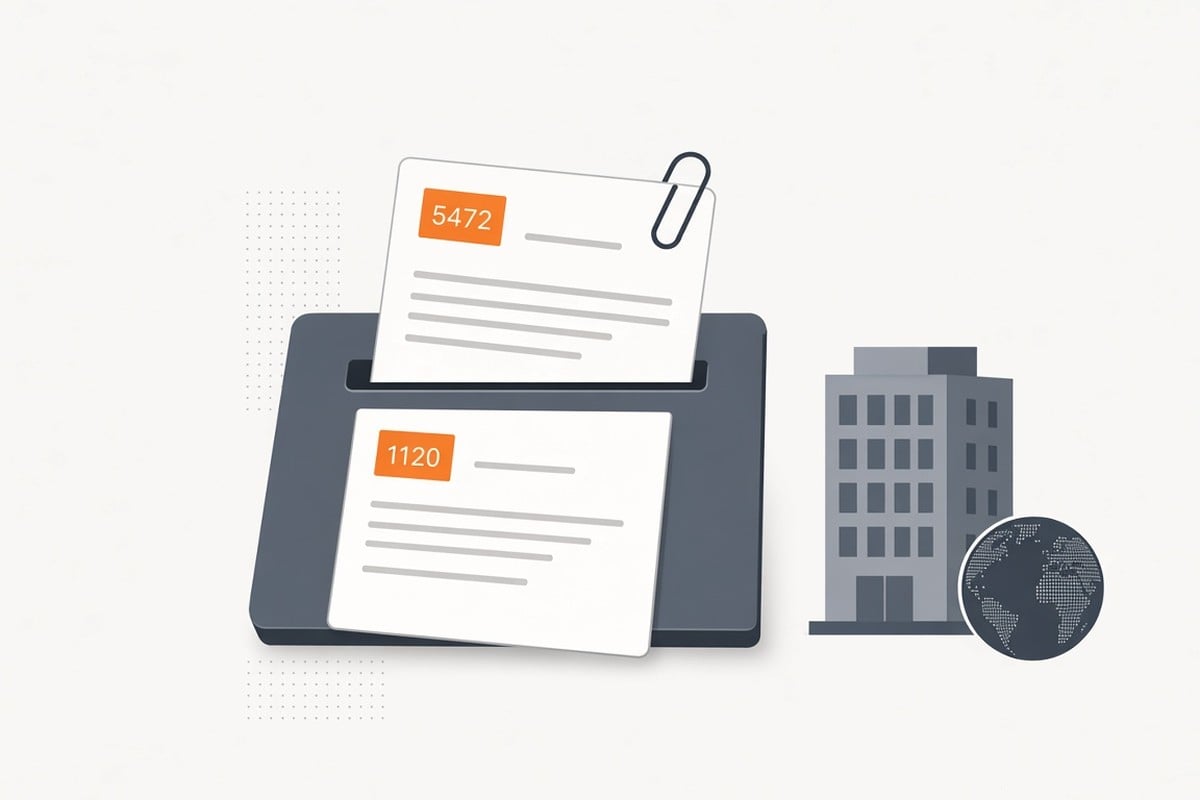
- A pro forma Form 1120. That is the mostly blank cover form. Write "Foreign-owned U.S. DE" across the top, add the LLC name and address, item B (your EIN), and item E if it fits.
- A completed Form 5472 for that year, attached behind it.
Our guide shows each part of the form in plain words: how to fill out Form 5472.
Step 3: Send It, and Keep Proof
Fax the packet to the IRS Ogden PIN Unit at 855-887-7737, at 300 DPI or higher, or mail it to the address in the current Form 5472 instructions.
Keep the fax confirmation page. Save the date, time, number dialled, and page count. That proof is gold if the IRS later says it never arrived. You can fax a ready packet with File Form 5472.
Step 4: Ask for Relief in Writing
Filing late fixes the missing form. It does not, on its own, erase a penalty that has already been charged.
If you have a notice, follow the instructions on it and send your reasonable cause statement to the address it gives you. The next two sections explain what to say. If you paid already, the IRS says you can file Form 843 to ask for a refund and abatement, with your letter, a copy of the notice, and your supporting papers.
Reasonable Cause vs. First-Time Penalty Abatement
These are two different doors. For this penalty, only one of them is usually open.
Reasonable Cause: The Main Door
"Reasonable cause" means you had a good, honest reason, and you acted like a careful person would.
You have to show your facts, not just claim them. The IRS rules for this penalty say your statement must cover all the facts and include a declaration that it was made under penalties of perjury. That is a formal way of saying: you sign it, and you swear it is true.
Things that can help your case:
- You truly did not know this form existed, even though you took care with your other tax duties.
- Your company is small. The IRS says it may apply reasonable cause more freely when a small corporation, meaning gross receipts of $20 million or less, had no knowledge of the rules, has limited presence in and contact with the US, and then complies fully and quickly once asked.
- You filed fast as soon as you found out.
- You kept good records and can show the bank trail.
Things that usually do not help on their own:
- "My adviser did not tell me." You are still responsible for knowing your filing duties. If an adviser made a real error, explain exactly what happened and show your proof. A CPA can tell you if that helps in your case.
- "We made no money." The duty to file does not depend on profit.
- Ignoring letters. Acting fast after you learn about the problem is part of showing good faith.
There is no promise here. The IRS decides case by case. That is why the letter below is a starting point, not a guarantee.
First-Time Abatement: Usually Not This Penalty
You may have read that the IRS waives a first penalty if you have a clean past record. That is called first-time abatement.
For these international penalties, the IRS says it generally does not apply. There is one narrow exception: some Form 5472 penalties that were assessed automatically, by the IRS system, when a late Form 1120 was filed. The IRS manual points to those assessed with penalty reference number 711.
So do not build your plan around first-time abatement. If your notice shows your penalty was assessed that way, ask a CPA whether the exception could fit. Otherwise, put your effort into reasonable cause.
How to Write a Reasonable Cause Letter
Keep it short, honest, and in order. Say what happened, when, and what you did next. Attach proof where you can, like bank records or earlier tax filings.
The IRS wants a signed statement under penalties of perjury for this penalty. The sample below is a template only. Change every bracket so it matches your real facts. Do not copy facts that are not true for you.
Template — change all brackets before you use this
Your LLC legal name, EIN 00-0000000 Tax year: year Notice: CP215 / CP15, dated date
Dear IRS,
I am writing to ask you to remove the $25,000 Form 5472 penalty for tax year.
I own LLC name, a single-member LLC formed in state on date. I live in country and I am not a US citizen or resident.
I did not file Form 5472 for year because say the real reason. For example: I did not know a single-member LLC with a foreign owner had to file this form. I filed my other required US forms on time.
I learned about the duty on date, from how you learned. As soon as I learned, I what you did. For example: gathered my bank records, completed the pro forma Form 1120 and Form 5472, and faxed the packet on (date). My fax confirmation is attached.
I have now filed the missing form, and I have set a reminder to file on time each year. I acted in good faith, and I ask you to remove the penalty for reasonable cause.
I declare under penalties of perjury that the facts in this letter are true and correct, to the best of my knowledge.
Signed: full name, title, for example Member Date: date Phone: number Email: email
Attached: copy of the notice, fax confirmation, other proof
Send it where your notice tells you to. Keep a copy of everything, and keep proof of mailing or faxing this letter too.
How Long Does the IRS Have? The Statute of Limitations
A "statute of limitations" is a deadline for the IRS, just like April 15 is a deadline for you. After it passes, the IRS generally cannot charge the penalty for that year.
In general, the IRS must assess an international information return penalty within 3 years after the return was filed. That is the rule the IRS gives its own appeals staff.
There is a catch if the form was never filed. A separate law, section 6501(c)(8), says the time to assess tax on a related return does not end before 3 years after the required information is finally given to the IRS. So "I never filed, so I am safe" is not a safe plan. Not filing can leave the door open much longer.
The exact dates depend on what you filed and when, so treat this section as a map, not a ruling. If an old year worries you, ask a CPA to work out your dates before you act.
How to Avoid It Next Year
A simple system beats a good memory.
- Put April 15 in your calendar now. For a calendar-year LLC, that is the normal due date. Add a reminder 30 days before it.
- Need more time? File Form 7004 by April 15. That gives you an automatic 6 more months, usually to October 15. You do not need to give a reason. See Form 7004 extension for Form 5472.
- Keep a money log during the year. Each time money moves between you and the LLC, write down the date, amount, and why. Your future self will thank you.
- Keep your fax proof. Save the confirmation with the date, time, number, and page count, next to a copy of the packet you sent.
- Review it once a year with a CPA if your life changes. A new owner, a loan, or a second company can change what you must report.
Frequently Asked Questions
The most common questions are answered in the FAQ section under this article. If your case involves several missing years, a loan, or a notice with a deadline this month, skip the reading and talk to a CPA today.
Disclaimer: SingleFax provides document preparation and fax services. We are not a CPA firm or a law firm, and this article is general information, not tax or legal advice. Penalty relief depends on your facts. Talk to a licensed CPA or tax attorney about your case.