Faxing for Legal Documents: When It Still Matters in 2026
 Mircea Rilă
Fax is not a universal fallback for court filings or service. Learn when rules permit it, what a transmission report proves, and how to send legibly.
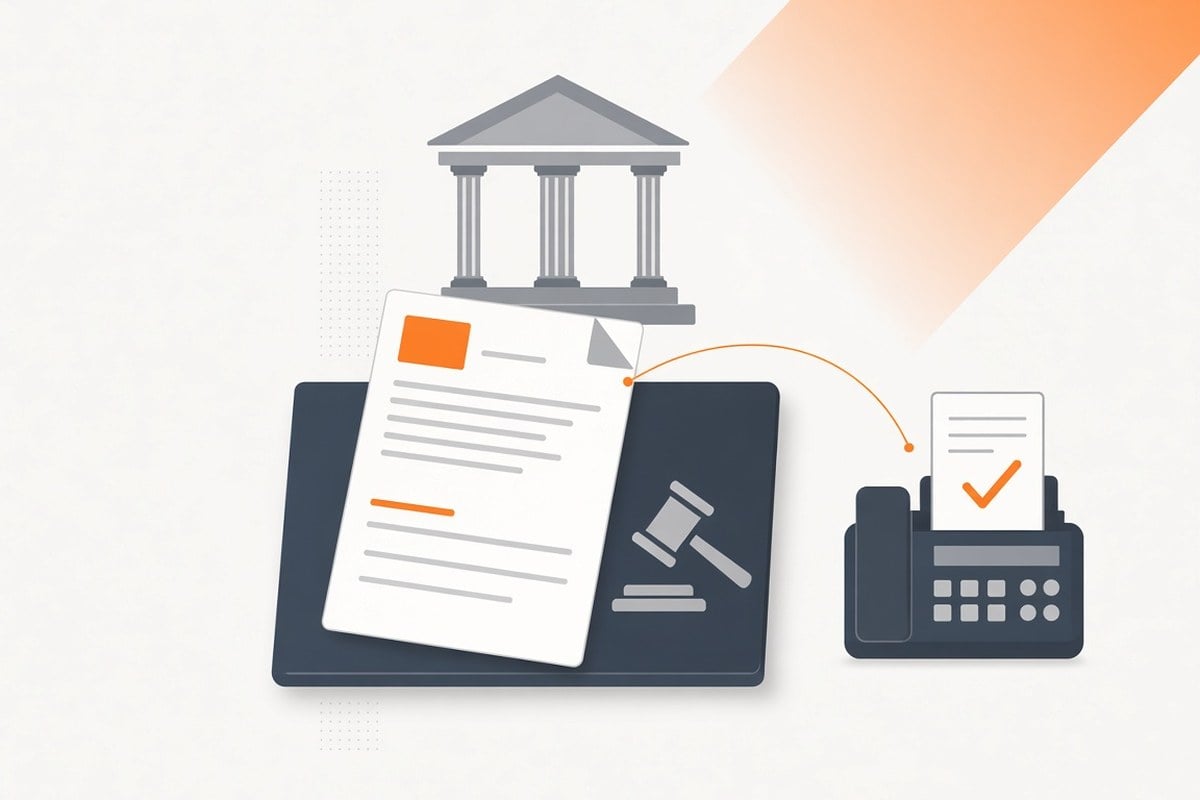
Why Fax Still Matters for Law Firms in 2026
Courts and counterparties increasingly use e-filing, but some rules, notices, agencies, insurers, and opposing parties still authorize fax for specific documents. Fax is not a universal fallback when a portal fails: use it only when the governing rule, standing order, clerk, or recipient permits it.
A fax report records the transmission result. It does not by itself establish filing, service, receipt, admissibility, or compliance with a deadline. Those consequences come from the applicable rules and facts.
SingleFax provides transmission, not legal filing or service. Confirm the applicable rule and recipient instructions.
Core Principles for Legal Faxing
- Authority: Confirm that fax is allowed for this document and destination.
- Legibility: Use a high-contrast source, readable type, and numbered pages.
- Recordkeeping: Keep the report with the matter file; note who sent it, when, and to which published number.
- Confidentiality: Put only routing information on the cover and verify the destination directly.
Matter Intake and Outbound Process
- Prepare Documents
- Export filings, letters, and exhibits to PDF.
- If photographing exhibits, capture straight‑on, high‑contrast images and combine into one PDF.
- Cover Sheet (Minimal but Sufficient)
- Matter/case number, court, parties, sender contact, total pages.
- Short subject ("Notice of Unavailability", "Exhibit B: Contract")
- Confidentiality notice (brief).
- Transmission Window
- Send during business hours for the recipient’s time zone (clerk offices, opposing counsel).
- If busy, retry; document the attempt times.
- Filing and Audit Trail
- Save the delivery confirmation in the DMS under the matter.
- Note the transmission in the case log with timestamp and sender.
Common Use Cases and Tips
Notices and Meet‑and‑Confer Letters
Keep the letter in clear, legible fonts (11–12pt). Add matter ID in the header and footers. Include a callback number for opposing counsel.
Exhibits and Evidence Snapshots
For photos, use bright lighting and crop edges. Combine exhibits into a single PDF in order. Verify page order before sending.
Insurance and Employer Correspondence
When a case intersects with insurer or employer records, fax may be accepted when the recipient confirms. Include claim or employee ID on the first page header (not the cover) and keep confirmations.
Government Agencies and Deadlines
Some agencies accept faxed forms or notice responses. Confirm the authorized method and destination on the current form, notice, or agency page. Do not assume that a fax preserves a deadline merely because a portal is unavailable. For government workflows, see Government Forms in 2026.
Security Considerations (Legal)
- TLS can protect the browser-to-service upload, but ordinary fax does not provide universal end-to-end encryption through the destination machine.
- Avoid placing confidential details on the cover sheet.
- Store confirmations with the matter; restrict access by role.
- Use MFA and unique logins for staff handling fax.
Quality Checklist for Clear Legal Faxes
- PDF preferred; for scans, use high contrast and straight pages.
- Avoid fine print; paginate and include total pages.
- Ensure signatures are legible; do not alter or darken them.
- Split a long packet only if the recipient permits multiple transmissions, and label each part clearly.
Template Snippets (Copy/Adapt)
"Legal Fax Cover: Minimal"
- To: Court/Agency/Opposing Counsel, Fax: number
- From: Firm, Attorney/Paralegal, Phone: callback
- Matter: Case No., Parties: A v. B
- Pages (incl. cover): #
- Subject: short title
Notice: This transmission may contain privileged information. If you are not the intended recipient, please notify the sender and destroy all copies.
Get Started
- Send now: send a single fax
- Receive now: receive a single fax
- Standardize: add a cover template and save transmission reports in your DMS
Related reading
Election materials follow separate state rules. For UOCAVA ballot return, use the election-office packet and see Can You Fax an Absentee Ballot in 2026?.